

A Humane Sovereignty 明王之治
True governance flourishes when it respects each individual's way.

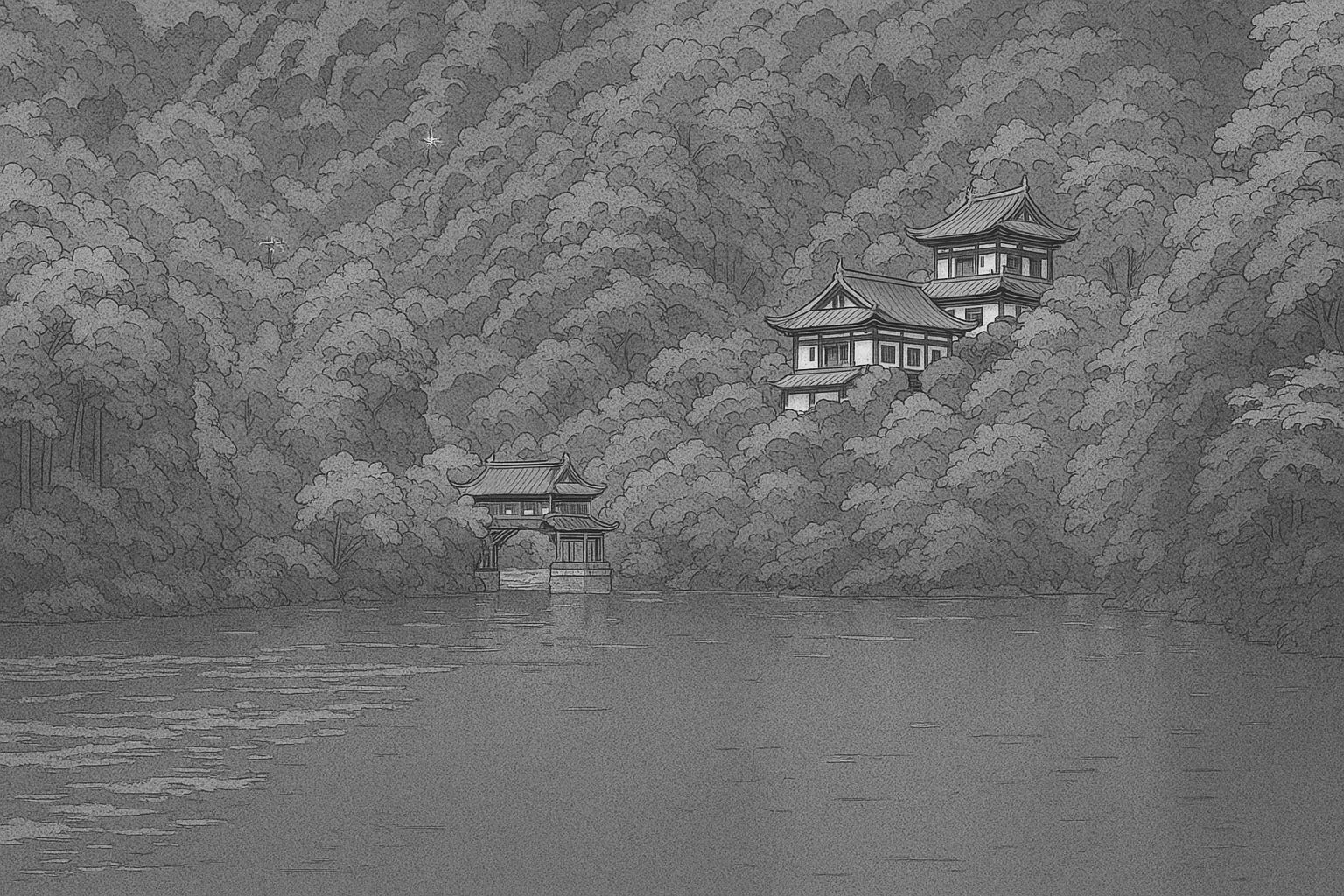
Is it possible to imagine a ruler whose greatest triumph feels like no triumph at all, whose influence stretches everywhere, yet no one feels coerced or beholden?
Lao Tzu’s words in the Tao Te Ching extol that style of leadership: unseen but pervasive, powerful yet non-meddling.
Of the best rulers
The people (only) know that they exist;
The next best they love and praise;
The next they fear;
And the next they revile.
...
But (of the best) when their task is accomplished, their work done,
The people all remark, “we have done it ourselves.”


Tao Te Ching, Chapter 17.
Lao Tzu laid the philosophical foundation for a “sage-king.” And it was Chuang Tzu who brought that principle down to earth, centering his politics on the average human being.
Most thinkers during the Warring States period (475 – 221 BC) penned blueprints for establishing political order and bureaucratic control. Chuang Tzu asked a different question: What does a political order look like when its first duty is to protect each person’s natural way of life?
Chuang Tzu’s philosophical prose and parables are admired through the centuries for their literary beauty and limitless imagination. His concept, “inward sageliness and outward kingliness 內聖外王,” which refers to an individual’s spiritual growth and social and political consciousness, has been used to characterize the ideal of practicing the Tao for personal transcendence and to bring peace and order to the world. When they go hand in hand, it’s possible that a society can foster genuine freedom and authentic, heartfelt relationships.
Nevertheless, in the not-so-distant past, we experienced some of the darkest moments in human history: the outright totalitarianism of the 20th century and the subjugation of the individual by the bureaucratic domination of the state.
Chuang Tzu’s insight and reflection are neither utopian nor vague. The functional, perhaps ideal, political order is one that can balance its own legitimacy with genuine respect for each individual’s freedom and innate path.
In what follows, we’ll explore Chuang Tzu’s humane political order — the government of the wise ruler, 明王之治, one that guards the space for spontaneous living, even as societies evolve in changing circumstances.
To think about one’s relationship with the existing political order is a part of the multi-dimensional existence of living in the modern world. We care about our mental well-being and spiritual growth, as we know finding harmony within is the foundation of how we interact with the outside world.
There is an inborn nature and disposition within each of us. When we tap into that innate endowment and craft a natural path to life, we are connected to a state of spontaneity.
If nothing stands in our way, we can follow this state of creative exploration and expression. Finding joy and contentment from doing what we love is priceless, as we feel deeply connected to the world.
Obviously, this is an ideal state. We live in a society. We are always entangled with the external. That means that we will inevitably encounter social constructs as shackles. Sometimes, when we subject ourselves to the pressure of social conventions, we can lose that connection with the inner self.
But that’s not the worst circumstance we may face. The social and political arrangements in a specific context usually reinforce one another, such that we are not only entrapped in a limiting social order, but our disobedience and rebellion, which is essentially about staying true to oneself, can be treated with malice and violence.
This leads us to the question: What are we looking for in a political order?
Is it security and personal safety? A stable and predictable environment to entrust our personal possessions and creative endeavors? And, is it possible to evaluate and adjust our relationships with a changing political order?
In our globalized world, finding a haven (for the body and spirit) has become a favorable choice for many people around the world. In a sense, we are constantly responding to the shifting political landscape in various societies.
Searching for an order that works
In a world of disorder and unpredictability, how do we preserve the integrity of our natural ways of life? Where can we find a place that allows the uniqueness of every person to flourish?
In a sense, human life is intertwined with unspeakable luck and coincidences. Living in a circumstance that values human dignity, tolerance, and freedom is fortunate. However, these essential values can become fragile in a social environment that is gradually becoming malicious.
No thinking person would want to live in a totalitarian nightmare, such as the Oceanian world depicted in Orwell’s 1984, Stalin’s Russia, or Maoist China.
For instance, back in the 1960s, you would need to apply for a permit from government bureaus to get married in China. In a communist state, your body and your spirit are not yours. They belong to the state.
And if you were full of aspirations and wanted to get into a business, the moment you started selling stuff, you would be doomed. You would be punished for your actions, and your direct family members would also be implicated. You will be labeled as a capitalist, which is a sort of original sin in a communist society. In this circumstance, the price of being a non-conformist would be turning yourself into an enemy of the state.
But where is the “state”? What is precisely the meaning of that “state”? Not someone else’s private property?
“Nonsense, there is no such thing as private property in a communist state.” You may hear someone say so. Good point. They have probably learned a great deal from Marx. But who controls the means of production? Who gets to decide where you should be working? Who has the power to allocate resources if everything belongs to the state?
Can you see the relationship between you, as an individual, and the shape of such a political order? Can you reform it? Can you exit from it? Can you build your life from it?
To a large extent, Chuang Tzu’s time is different from ours. In the Warring States Period (475 – 221 BC), wars and human struggles were an evident danger to the lives of ordinary people. To persuade the rulers of his time that a political order should allow individuals to pursue their natural paths is simply wishful thinking.
Yet, we may ask, to what extent can we say with certainty that time’s different now?
Chuang Tzu wrote a conversation between Lao Tzu and one disciple. The student asks Lao Tzu about the government of the wise ruler. Lao Tzu said,
“In the government of the wise ruler 明王之治, achievement is the greatest in the world, but it seems not to be his own. His influence reaches all things, but no one depends upon him. With him, there is no promotion or praise; he lets everything find its own enjoyment.”1
I am sure Chuang Tzu is not trying to give a solution or direct answer here because that would be a subjective opinion or even ideological indoctrination. Like his concern about preserving the integrity of one’s natural path, it is up to each one of us to discover what it is that’s natural for us to pursue in this life. We will have to explore and take risks throughout life to find out.
However, his message serves as a clear reminder. The proper kind of political order should, at the very least, be humane and empowering, allowing individuals to freely pursue their own ways of life and achieve harmonious coexistence with others and the political system.
So, that means we’ll need a creative space to craft our own life’s meaning and purpose without being constrained by external and arbitrary forces.
Such a political order recognizes the limits of its reach, as too much intervention and meddling can restrict individuals’ living space. Yet, Chuang Tzu offers us a challenging task: Can we adjust to a changing political order to preserve our freedom and our cherished ways of life?
Fung Yu-lan, Chuang Tzu: A new selected translation with an exposition of the philosophy of Kuo Hsiang, (Beijing: Foreign Language Teaching and Research Press, 2012), 94.
Important question to ponder on. I like Chuang Tzu's 內聖外王 linking between personal growth and sociopolitical transformation. Same can be said, those working on the larger systems change need to think about their inner journey too.