


Living in society is like playing a game. In a simulated game there are levels, retries, and fresh starts. We can experiment as many times as we want. Part of the thrill is watching our main character face hurdles and, through trial and error, unlock the next stage.
When we play a game, we are both actors and observers. We can detach from the storyline and view the character’s choices from a higher perspective.
In life, though, we are often consumed by what’s happening now. With so much at stake, anxiety, pressure, worry, and expectation pull us into pure participation.
When we make mistakes, fear and restlessness take over. Wanting to play it safe, we hesitate before the unknown and freeze.
We become passive actors, resisting and reacting, unable to observe our actions and innermost feelings.
When we cannot observe the inner self, we get lost. We identify with whatever is projected onto us: praise and criticism, success and failure, fame and labels — external forces that lure us into believing they can define us.
At that point, we are easily caught by social currents. Schools, governments, media, prevailing opinions, and conventions keep us in a loop through cultural programming.
Yet, we still feel a sense of unease deep within. The inner voice is still there, dim but persistent. We find ourselves in a predicament of existence.
What we need is a conscious choice to return to the observer’s seat. Without it, we risk constructing a borrowed identity —a derivative mode of existence that is monotonous and mechanical.
But is it possible to break away from pervasive external influences? Can we truly become the master of our own self?
Finding your Tao
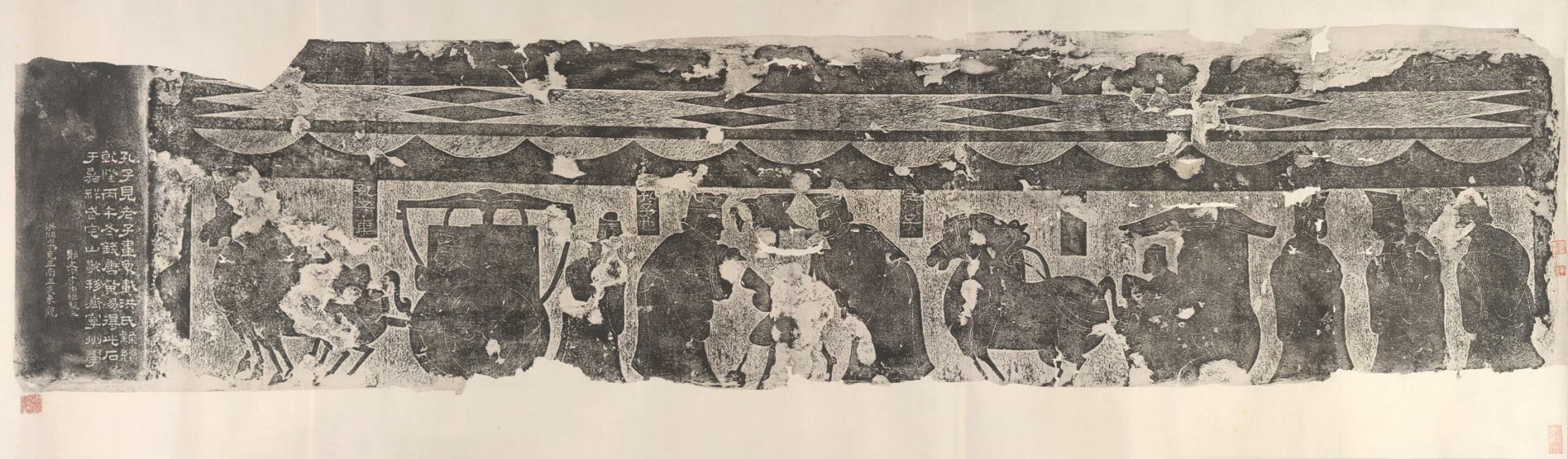
Confucius, already fifty-one years old, had not yet heard of Tao. Then he went to see Lao Tzu, who said to him, “I hear you are a wise man from the north. Have you found the truth (Tao)?”1
“Not yet,” said Confucius.
“How did you go about searching for it?” Asked Lao Tzu.
“I looked for it in governmental systems and institutions for five years and without success.”
“And then?”
“I tried to find it in the principles of yin and yang for twelve years and again in vain.”
“You are right,” said Lao Tzu. “For if Tao could be given as a gift, everybody would have offered it as a tribute to his ruler. If Tao could be told about, everybody would have spoken to his brothers about it. If Tao could be inherited, everybody would have bequeathed it to his children and grandchildren. But no one could do it. Why? Because if you haven’t got it in you, you could not receive Tao. If the other person hasn’t got it, the truth would not penetrate him.
“What is felt in oneself cannot be received from the outside and the sage does not try to communicate it. Humanity and justice are but like roadside inns to the ancient kings, where one could stop overnight, but not stay permanently. The perfect men of ancient times traveled by the road of humanity, lodged for a night at the inn of justice, and then wandered in the wilds of freedom. Freedom means doing nothing contrived (wu-wei).
“Resentment, favor, give, take, censure, advice, life and death — these eight are means for correcting a man’s character, but only one who comprehends the great process of this fluid universe without being submerged in it knows how to handle them. Therefore, it is said, ‘Rectify what can be rectified.’ When a man’s heart cannot see this, the door of his divine intelligence is shut.”
The observer
The Tao cannot be transferred because one must awaken to it oneself. We pass along conventions and popular opinions without examining them. This is all a mechanical repetition.
When we are unaware of our entanglements with a specific environment, we are simply reacting to its cues. We are not observing. We are not seeing. We are identifying with the impermanent appearances.
Identification with appearances is the cause of suffering and confusion. Confucius takes humanity/justice as the only viable truth, but he does not notice that he is pursuing the attributes of truth, its surfaces. He is in pain when others don’t resonate, because each person sees truth in his or her own way.
The identification continues today. We fuse with slogans, political and religious beliefs, external identities, and doctrines, and then defend them. We end up controlled by them.
Taking the observer’s seat means being the gatekeeper of the inner room. It keeps us alert to what is happening in us. That is the spiritual state of living in wu-wei. So when we hear names or ideas about “humanity,” “justice,” or any label, we study and understand them without enchantment or judgment.
That freedom is the fruit of wu-wei. It allows us to be at ease with the spontaneous unfolding of life itself. We engage names and ideas without becoming them. Observing, we watch them come and go, without clinging.
This detached observer state leads us to see “the great process of this fluid universe,” the ever-transformation of things in the world. This is the fundamental spirit of Taoism: everything produces and operates spontaneously by itself in the universe. Intentional, willful actions cannot change that flow; forcing is usually driven by the desire to identify with the temporary and external.
“Reversion is the action of Tao. Gentleness is the function of Tao.”2 Everything is in flux: growth and decay, rise and fall, life and death, progress and regress, all in a process of transformation:
The ten thousand things are really one. We look on some as beautiful because they are rare or unearthly; we look on others as ugly because they are foul and rotten. But the foul and rotten may turn into the rare and unearthly, and the rare and unearthly may turn into the foul and rotten.3
What is right in one context becomes wrong in another. What is proper here becomes improper there. Joy can turn to pain. Sorrow can transform into understanding and inner peace.
When captured by the immediate reality, we lose the clarity to see possibilities within the natural order. When we stop observing and start aligning with a single facet of perceived reality, we become the unconscious participant again.
In this sense, adaptation becomes our viable path. To adapt, we assume the observer’s role, again and again. Amid the mysteries of living, no one can give us a magic formula. We must discover and see for ourselves.
Games can allow us to switch to free camera and restart. Life doesn’t. Taking the observer’s seat is to be with one continuous run. When we stop forcing and start seeing, we can follow along with the natural course.
Next in this series:

The story is based on the original text in Chuang Tzu, Chapter 14, “The Turning of Heaven (tianyun 天運).” For this pose, I referenced Lin Yutang’s adaptation. See Lin Yutang, The Wisdom of Laotse (Beijing: Foreign Language Teaching and Research Press, 2009), 261-262. Translation modified.
Ibid., 151.
Burton Watson, “Knowledge Wandered North,” in The Complete Works of Zhuangzi (New York: Columbia University Press, 2012), 177.
Nice! I can resonate with this piece, especially the concept of life as a game. Indeed, there really is no magic formula. Zen Buddhism prioritizes learning through experience, not just theory and words. Hence the many 道 made available to practice in real life - from tea, martial arts, ikebana flower arrangement, to daily chores and cleaning.
You may enjoy this idea of life as a game from this interview with Muho Noelka, German-born former Zen monk. Even being a monk is a game. :) And we have the means within us to quit these games. https://www.youtube.com/watch?v=0IU5AgLLeIo&t=1192s (minute 9:44)