

#28 Prevail in Life While Lying Low
Tao Te Ching, Chapter 28: Discover the contrarian yet powerful life principle of keeping a low profile; Use the symbol of bamboo to navigate the ups and downs of life

Welcome back to The Wisdom of Lao Tzu.
We are reading chapter 28 of Tao Te Ching this week.
In our exploration journey, we cannot help but ponder the optimal approach to navigating life's fluctuations.
Is there a way to accomplish things without compromising our intrinsic nature?
In this chapter, Lao Tzu imparted the wisdom of lying low — a philosophy of preserving authenticity and wholeness in facing life's challenges.
Let’s dive in.
**28**
知其雄,守其雌,為天下谿。
為天下谿,常德不離,復歸於嬰兒。
知其白,「守其黑,為天下式。為天下式,常德不忒,復歸於無極。知其榮,」守其辱,為天下谷。
為天下谷,常德乃足,復歸於樸。
樸散則為器,聖人用之,則為官長,故大制不割。
Border-crossing: English translations
#1 Lin Yutang’s version
He who is aware of the Male
But keeps to the Female
Becomes the ravine of the world.
Being the ravine of the world,
He has the original character which is not cut up,
And returns again to the (innocence of the) babe.
He who is conscious of the white (bright)
But keeps to the black (dark)
Becomes the model for the world.
Being the model for the world,
He has the eternal power which never errs,
And returns again to the Primordial Nothingness.
He who is familiar with honor and glory
But keeps to obscurity
Becomes the valley of the world.
Being the valley of the world,
He has an eternal power which always suffices,
And returns again to the natural integrity of uncarved wood.
Break up this uncarved wood
And it is shaped into vessel
In the hands of the Sage,
They become the officials and magistrates.
Therefore the greater ruler does not cut up.
#2 Edmund Ryden’s version
To know the cock yet hold on to the hen is to be the valley of the world.
Once you are the valley of the world, perennial life force will not desert you.
Perennial life force not deserting you brings you back to the state of the infant.
To know the white yet hold on to the black is to be the pointer of the world.
Once you are the pointer of the world, perennial life force will not waver.
Perennial life force not wavering brings you back to the limitless.
To know honour yet hold on to shame is to be the gully of the world.
Once you are the gully of the world, perennial life force will now suffice;
Perennial life force now sufficing brings you back to lumpen wood.
Lumpen wood is cut up and made into cups;
The Sage uses it, however, to become the chief official.
Therefore,
Great ruling leaves no scar.1
#3 D. C. Lau’s version
Know the male
But keep to the role of the female
And be a ravine to the empire.
If you are a ravine to the empire,
Then the constant virtue will not desert you
And you will again return to being a babe.
Know the white
But keep to the role of the black
And be a model to the empire.
If you are a model to the empire,
Then the constant virtue will not be wanting
And you will return to the infinite.
Know honor
But keep to the role of the disgraced
And be a valley to the empire.
If you are a valley to the empire,
Then the constant virtue will be sufficient
And you will return to being the uncarved block.
When the uncarved block shatters it becomes vessels.
The sage makes use of these and becomes the lord over the officials.
Hence the greatest cutting
Does not sever.2
Deeper dive
Two main messages in this chapter are essential to understanding Lao Tzu’s life philosophy.
1. The philosophy of lying low
The opening statement — “Know the male, but keep to the role of the female. And be a ravine to the empire” — reveals an attitude of not contending.
The act of non-contending is a strategic choice made after thoroughly understanding the pros and cons of contending or being dominant and forceful.
We tend to associate positivity with being dominant and commanding. Is Lao Tzu’s stance on keeping low a reminder of the risk of not seeing things clearly? Perhaps because of being emotionally involved with maintaining such a domineering status? In this sense, there is always a hidden cost involved.
Conversely, choosing to lie low reveals taking a position that offers a holistic perspective. In this humble position, we can perceive the significant and minor details of the overall circumstances.
Having such an inclusive and tolerant mindset, we can have a grasp of the external surroundings and respond to contingencies and crises with speed and precision when necessary.
Also, choosing to be black while knowing the benefits of whiteness indicates Lao Tzu’s appreciation of the organic whole.
The dualities of the world, black and white, small and big, high and low, are the components of unity. Appreciating their respective peculiarities reveals an understanding of the invisible yet potential transition between the relative opposites.
2. Authenticity as a quality of a Taoist
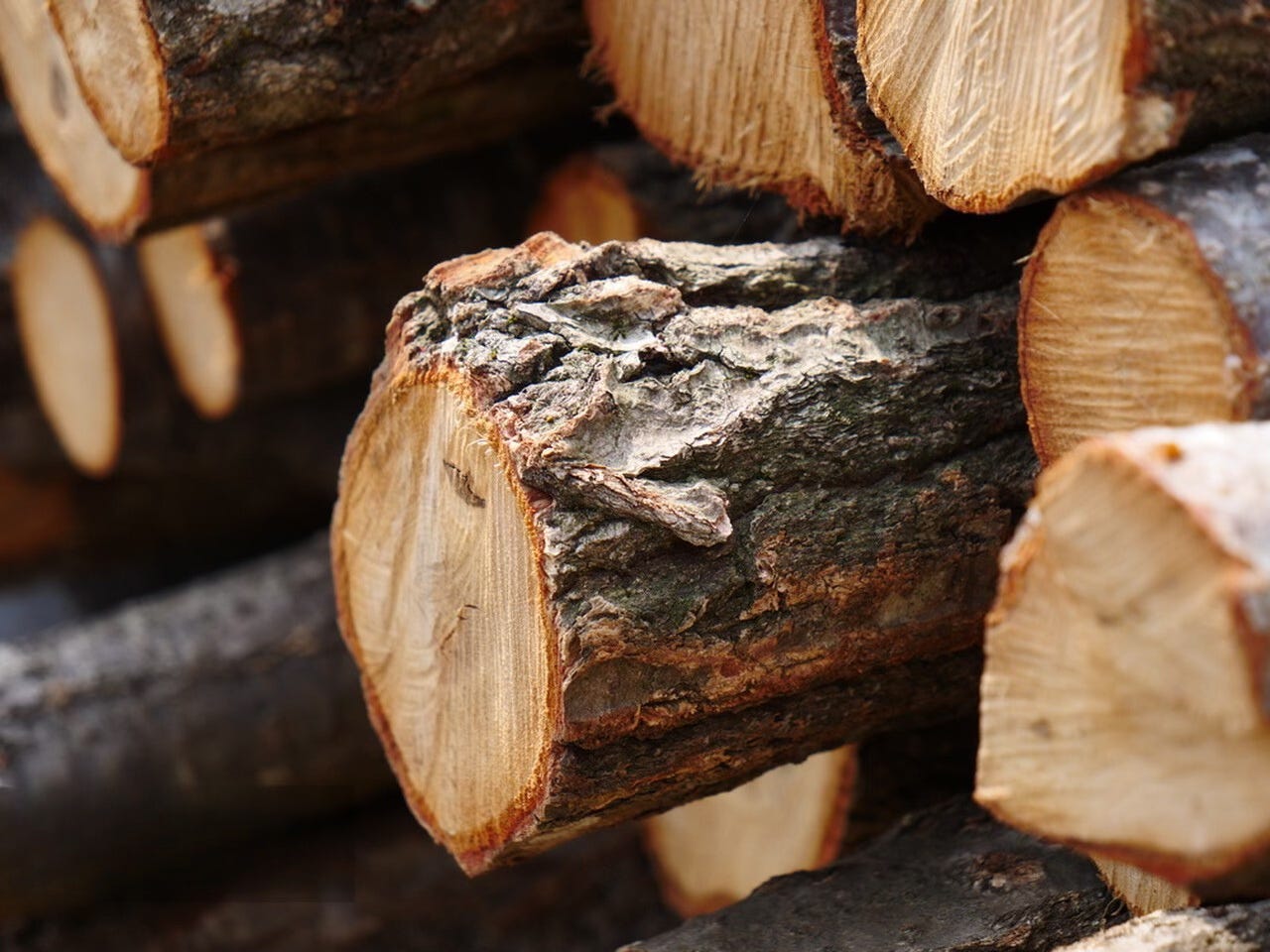
The “uncarved block” or uncarved wood is a frequent symbol in Lao Tzu’s writing. It refers to an original state without artificial and arbitrary changes or markings.
Essentially, it signifies preserving the state of wholeness and remains to be natural. For individuals, it is about preserving the unspoiled nature.
To use it to refer to human quality is being authentic, like a babe whose character has not been tarnished by the world or worldly experience. Because of this authenticity, a babe is lovable in the eyes of others.
The “uncarved block” also refers to the fundamental spirit of Taoism, which is to reserve the urge to demonstrate, as represented by Lao Tzu’s saying, “Great skill seems awkward.”
This tenet or spirit has a wide range of influences on traditional Chinese life.
In calligraphy, the best works express the most authentic feelings and sentiments of a calligrapher. Some are first-hand private letters and draft requiems for family members without intending to be considered artistic works. Some of the most esteemed and appreciated works employ the technique of concealing a calligrapher’s skill to make the writing more natural instead of exhibiting showmanship.
In Chinese poetry, the most cherished literary works that have stood the test of time are the ones that use simple language instead of flamboyant and showy to deliver a poet’s authentic reflections on life.
In Chinese military craft, the best general is the one who knows how to win a war but never initiates it because the act of war brings catastrophe to one’s authentic soul and the lives of others.
All the acts of demonstrating, such as showing calligraphy skills, crafting beautiful words and poems, and winning fights and wars, harm what is authentic and natural.
Spiritual Taoism
On the journey of chasing excellence and establishment, many of us have been subjecting ourselves to the prevailing opinion that we have to contend and compete to win in life.
But is this the only viable path?
Do you think we can prevail without contending?
Is it possible to remain who we are after going through the ups and downs of this life?
The strategic advantage of lying low
Lao Tzu tells us that there is an intrinsic value in lying low in life’s journey that most of us are unaware of or do not fully understand.
Dwelling in a lowly position is not a passive or submissive gesture to accept life as it is.
Instead, this is consciously choosing to give up the dominant, ostentatious, and flashy position to have a holistic grasp of the overall situation in a changing environment.
After experiencing life's fluctuations, we understand that fortune and misfortune, opportunities and failures, and stability and crises are inherently opposite yet integral parts of life.
We realize that these seemingly opposing forces are interconnected and interchangeable.
We tend to get swayed by the most positive aspects of life while overlooking the necessity of being resilient in facing unpleasant realities.
This is why Lao Tzu prefers to stay lowly without contending (for credit or rewards). It reveals a subtle wisdom of rising above right and wrong, or joy and sorrow, being optimistic or pessimistic of this world, and having a transcendent attitude of not caring what others in society will say about us.
Guarding your authenticity
On a deeper level, Lao Tzu tells us it is crucial that we keep low to guard our authenticity, integrity, and wholeness.
Because we may inevitably be influenced by remarkable achievements and overwhelmed by negative thoughts and emotions to the extent of forgetting the most fundamental elements of living.
So, we force ourselves to blend in, conform, and become the person we have never meant to become without realizing that we are hurting the authenticity and wholeness of our souls.
Or, we bathe in our accomplishments and get submerged in our inflated ego, going to another extreme level of losing ourselves.
A person is a complete unity, or a small universe, with dignity, idiosyncrasies, waywardness, and incalculable nature. Like the “uncarved block” that has the potential to be made into different things, the individual is full of potential and possibilities.
In this sense, a person is not primarily a member of a class/group, a cog in an organization, or a numerical unit in a large society or state.
Any philosophy or ideology that preaches such a mechanistic view of an individual results from either an insufficient and cynical understanding of humanity or sheer folly and is, therefore, laughable.
Thank you for reading.
Until next time,
Yuxuan
Daodejing, trans. Edmund Ryden. (Oxford: Oxford University Press, 2008), 59.
Tao Te Ching, trans. D. C. Lau. (London: Penguin Classics, 1963), 33.