

Some Thoughts on China’s Social Problems
Why I think the country has reentered a historical watershed moment

I came across an interesting article this week — “The price of progress: China’s Gen X and the burden of consumerism,” about the good and bad elements of consumerism, government policy and its impact on over-consumption, and the necessity of improving social welfare.
The author of that article recognizes the essential benefits of consumerism, such as driving technological innovation and increasing overall productivity for an economy. However, the author also makes the point that it is excessive consumption that is concerning.
In particular, government policies are contributing to the trend of over-consumption. This makes sense. Many governments worldwide have been preoccupied with the economic logic of boosting consumption to stimulate growth whenever there is an economic recession or similar problems.
As a result, we have many cases of rising public debt and misallocation of resources into unproductive activities. Consequently, as the temporary effect of stimulus diminishes, governments can create even more incentives to pump the economy. More capital injection, more spending, as if the bureaucratic monster has been constantly drugged with monetary dopamine, and the cycle repeats.
When the general economic environment is vibrant and filled with exuberance and optimism, people are willing to spend more because they are confident about the overall economic prospect and their expanding bank accounts. In addition, to keep the consumption momentum going, it requires better social infrastructure, such as a functional social welfare system, to make some less well-to-do people feel that they have something as a last resort to hold onto in times of emergency.
Economic hardship is usually felt the most by those vulnerable individuals and families. Taxation, inflation, and the depreciation of the fiat currency can gradually eat up their hard-earned savings, further eroding their financial base. In contrast, people with affluent backgrounds or earning high salaries can always find creative ways to navigate these seemingly unavoidable barriers.
This is precisely the situation in China. I agree with the author’s view that social welfare in the country has become a tool to “maintain the privileges of certain groups.” This is not a secret. In general, people working in the public sector can expect to receive quality healthcare at a low cost. And if you work in the government, the type of medical treatment you can get corresponds to your ranking in the bureaucratic system.
Moreover, the design of the household registration system entrenches a systemic disparity in terms of access to educational, medical, healthcare, and other public resources and benefits. This means that if you want to get your kid enrolled in a relatively good high school in a particular city, which could give them a leg up in the college entrance examination, you would have to find a way to register your household in that city. Some people have done this in the past through investing in an apartment or marriage. The general rule of thumb is this: no household registration and no access to the public resources offered in the target city.
Disillusionment and running away
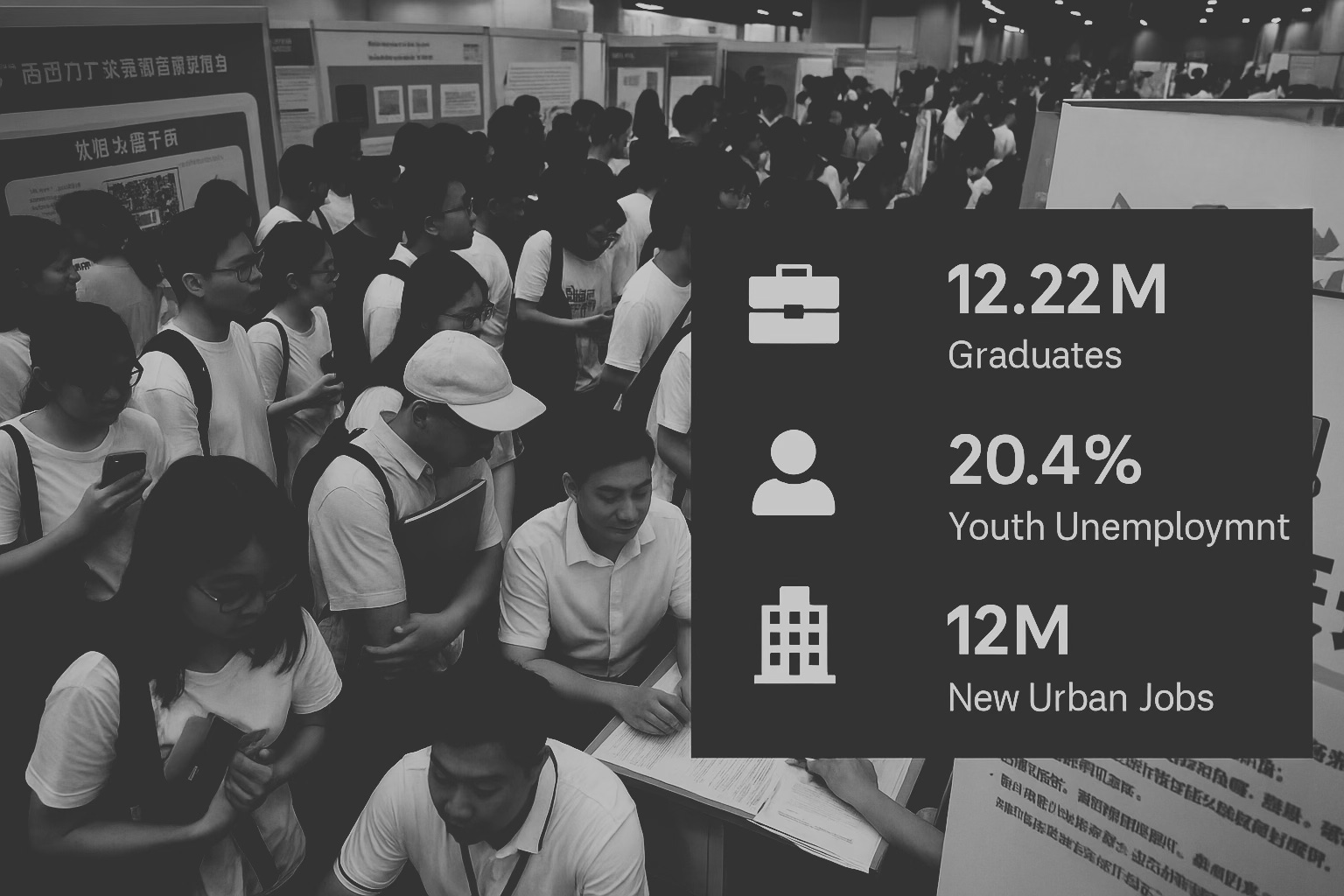
Nevertheless, what I think is really worrying for the country right now is something else. First, unemployment for young college graduates. The vast majority of these young people have gone through the COVID-19 pandemic period. After this horrible experience, these graduates soon realized that the macroeconomic situation may not be on its way to recovery anytime soon. With the increasing number of foreign companies leaving the country or closing part of their operations and many domestic companies shutting down, finding a job is getting harder for most graduates these days.
At the same time, many professionals in their 30s and even 40s are also disturbed by the reality of losing their jobs, salary cuts, and finding it has become more challenging to be hired beyond 35. Most people in this group already have families, so they probably have to pay monthly mortgages.
As a result, for these two groups, the real issue is not about over-consumption at all. It’s cutting their expenses due to a very pessimistic outlook on the economy and their future.
Amidst such gloomy economic circumstances, Beijing is still offering generous foreign aid packages to some African countries. I wonder what kind of attitude a family from the country’s western region, with fewer household savings and earning power than a family in Shanghai or Beijing, would have in response to this.
Or, what would they say about Beijing’s military ambitions with regard to invading Taiwan? Are they aware that the government could have allocated some military and defense spending to healthcare and education instead of building more aircraft carriers and missiles targeting Taiwan?
Another issue, equally important, is the ongoing phenomenon of people fleeing the country, or “runology.”
To run, essentially, means the flight of the person and their possessions. Individuals who have decided to leave have realized that they cannot make it in this land. So, some of the best and the brightest minds will find their destinations somewhere else, somewhere safe. For these people, the irony is that many of them would have stayed to build their lives while contributing to the country’s progress, yet the homeland can no longer be that shelter for the heart. This unsettling experience will continue to trouble their souls thereafter.
Exit for the affluent means transferring their capital and assets out of the country. The gradual and persistent widening gap between China’s political climate and ways of doing things with democracies and advanced economies has only exacerbated the rising business and political risks. That means geopolitical confrontations will continue to dominate the Asia-Pacific region and global politics in the next 5 to 10 years or even longer.
In this sense, this group is not alone in their flight, as businesspeople from Hong Kong, Taiwan, Wall Street, and other places have been doing the same in recent years. It should be noted that the reason that Communist China could catch up economically is because of the initial foreign direct investment from Taiwanese and Hong Kong businesses in the 1980s, which were then followed by Americans, Japanese, and others. But it seems that now is the time for departure.
So, what will the landscape look like at some time when the music stops? A brain drain? A capital shortage or a bleak economic and social outlook? I do not know, and I can only imagine.
After all, the course of a country’s development is generally determined by the direction of its policies, as well as the temperament and traits of the people. Just now, it seems that China has reentered that watershed moment in 1949, with the fate of the nation up in the air.
So interested in a Taoist take on the difficulties of our times, on interacting with politics, on how to be most helpful in light of naturalness. I am new to these concepts - they speak to my heart but I still struggle to integrate them with into my greater worldview.
And Southeast Asia tries not to pick side yet a central arena for the US-China competition.