

#8 The Highest Goodness
Tao Te Ching, Chapter 8: The virtue of a Taoist, the symbol of water, and the Taoist way of life.

Welcome back to The Wisdom of Lao Tzu.
Today, we are reading the eighth chapter of the Tao Te Ching, where we can find the symbol of water.
The Taoist sage, in Lao Tzu’s view, understands, appreciates, and adopts the nature of water in their life’s journey.
From reading this chapter, we can get to know more about the Taoist way of life. And more importantly, we can incorporate some of the principles to adjust our positioning in life.
Let’s dive in.
**8**
上善若水,水善利萬物而不爭,處眾人之所惡,故幾於道。
居善地,心善淵,與善仁,言善信,正善治,事善能,動善時。
夫唯不爭,故無尤。
Border-crossing: English translations
#1 Lin Yutang’s version
The best of men is like water;
Water benefits all things
And does not compete with them.
It dwells in (the lowly) places that all disdain —
Wherein it comes near to the Tao.
In his dwelling, (the Sage) loves the (lowly) earth;
In his heart, he loves what is profound;
In his relations with others, he loves kindness;
In his words, he loves sincerity;
In government, he loves peace;
In business affairs, he loves ability;
In his actions, he loves choosing the right time.
It is because he does not contend
That he is without reproach.
#2 Edmund Ryden’s version
The highest goodness is like water:
Water benefits the myriad things and rests in the places everybody detests.
Therefore,
It is close to the Way.
Dwelling aims to be earth-bound;
Thinking aims to be profound;
Giving aims to be like heaven;
Speaking aims to be trustworthy;
Governing aims to be correct;
Accomplishing aims to be capable;
Undertaking aims to be timely.
Only through not competing will there be no disaster1.
#3 D.C. Lau’s version
Highest good is like water.
Because water excels in benefiting the myriad creatures without contending with them and settles where none would like to be, it comes close to the way.
In a home it is the site that matters;
In quality of mind it is depth that matters;
In an ally it is benevolence that matters;
In speech it is good faith that matters;
In government it is order that matters;
In affairs it is ability that matters;
In action it is timeliness that matters.
It is because it does not contend that it is never at fault.2
Deeper dive
For this chapter, D. C. Lau and Edward Ryden adopted a literal translation method, stating, “the highest goodness is like water” or the “highest good is like water.”
Lin’s version is more straightforward, as it associates water with the quality of the Taoist sage.
This chapter implies that the symbol of water can be used as a mirror for self-improvement in life’s journey.
He Shanggong’s (approximately 200 BC - ?) comment on the first sentence, “Highest good is like water,” captures this message, as he describes that “The best kind of person embodies the nature of water.”3
But how do we understand this connection between water and the quality of the Taoist sage?
Water chooses the lowly position on the earth. It benefits all while not contending with the world’s myriad things.
We can learn from water to be content with residing in a lowly place and not thwarted by others’ disfavor in society.
In Taoist thinking, particularly from the Tao Te Ching, the “lowly” place does not equate to an utterly submissive attitude. Instead, it often indicates the wise choice of lying low.
A Taoist sage, from Lao Tzu’s perspective, is focused on building their inner universe such that to become profound and tolerant of the things of the world.
The sage’s heart is expansive like a great sea.
They value kindness and generosity when interacting with others in society, bringing benefits to them.
They rarely speak, but they speak honestly and sincerely when they do.
They prioritize peace, fairness, and effectiveness in managing governance and human affairs.
When planning, strategizing, and acting, they know the value of timeliness.
Lao Tzu emphasizes the importance of learning from nature to improve the quality of existence in the human world. So, being like water is part of Lao Tzu’s practical wisdom to navigate the complexity of life.
A Cultural Note
The alleged author of the Tao Te Ching, Lao Tzu, or Laozi (pinyin system), is a great example of this chapter’s teaching.
In fact, the authorship of the text is still undecided. Some scholars dated Lao Tzu and Tao Te Ching earlier than Confucius (551–479 BCE). However, scholars still disagree on the exact identity of Lao Tzu and his book.
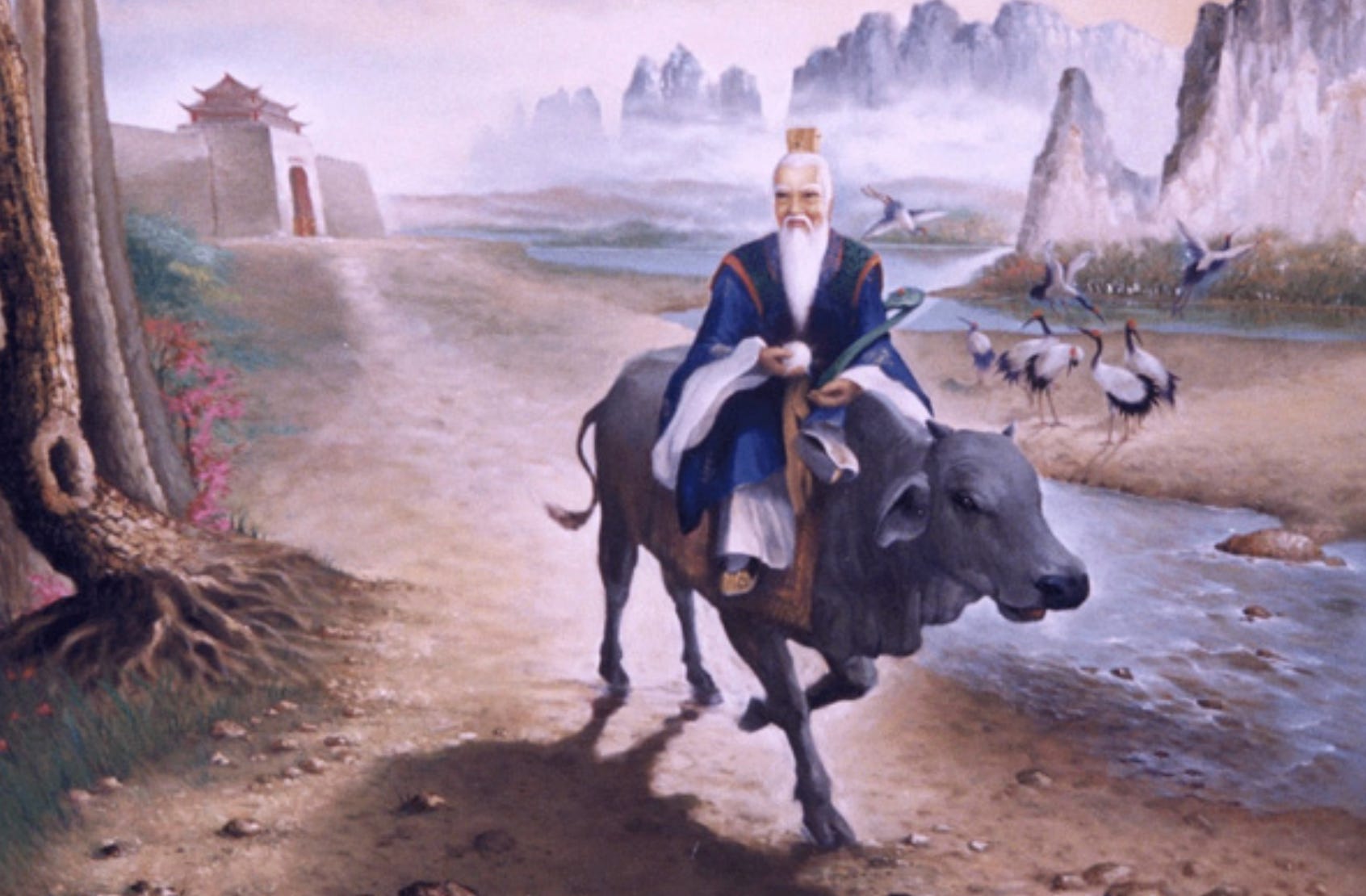
However, in a legendary story, Lao Tzu was remembered as a court historian 史官 in the Zhou Dynasty (1046 BC – 256 BC) throughout most of his time, much like a librarian working in a modern library (“In his dwelling, the Sage loves the lowly earth”).
However, it should be noted that he was also in charge of managing official documents, including the treaties, records, and correspondence between the royal Zhou government and its fief states.
This experience allowed Lao Tzu to witness the epitome of the Zhou dynasty and its irresistible fall.
Tao Te Ching is full of teachings on governance and managing human affairs, which can be read as Lao Tzu’s reflections on the current events and the disorder during his time.
Legend says that Lao Tzu eventually left his post and country. On his way out of the Zhou, at the last checkpoint, the guardian of the city gate kept him for some time, judging that Lao Tzu was a sage.
In exchange for his exit ticket (like a passport), Lao Tzu agreed to write down his thoughts. After reading his work, the city gate guardian was obsessed with it and immediately became Lao Tzu’s disciple.
They left the country and went to an unknown western territory together.
If the legend were true, we would know that writing the Tao Te Ching was actually not Lao Tzu’s intention.
But because of his legendary leave from the Zhou dynasty, the world was enriched with Taoist wisdom.
Thanks for reading!
See you next week,
Yuxuan
Daodejing, trans. Edmund Ryden. (Oxford: Oxford University Press, 2008), 19.
Tao Te Ching, trans. D. C. Lau. (London: Penguin Classics, 1963), 12.
「上善之人,如水之性。」See Wang Bi et al., Four Kinds of Laotse 老子四種 (Taipei: National Taiwan University Press, 2016), 85.